
There are 7 triathlon distance types: sprint is 25.75km in total, standard is 51.5km, and IRONMAN is 226km. At every distance, nearly 8 tenths of the course is cycling. Most of the gear whose shape the competition rules set is also these 3: the bike, the helmet and the wetsuit.
The Shoe Nerd's top pick
Buy the goggles, helmet and number belt first, those 3. These are the 3 you can say, from the rules, are used at any race whatever the water temperature. Whether you need a wetsuit or a trisuit swaps with water temperature. Decide after reading the entry guide of the race you apply to.
Key points
- Of the standard 51.5km, the bike is 40km, about 78% of the course. The swim is only about 3%
- In the general division, wetsuits are banned at 22℃ or above for swims of 1500m or less. They become mandatory at 15.9℃ or below
- A bike with a flat bar is banned by the rules. Only in beginner races may the race regulations allow it
The view that "swimming is the hard part" collapses in the distance table
Hear "triathlon" and the first thing that comes to mind is swimming in the sea. But add up the distances, and of the standard 51.5km, the swim is 1.5km. About 3% of the course (1.5 ÷ 51.5).
The longest is the bike at 40km. It takes about 78% (40 ÷ 51.5). Even at the IRONMAN 226km, the bike is 180km, about 80% (180 ÷ 226).
This ratio shows up as is in the amount of gear rules. Reading the competition rules, what is set in detail down to shape and dimensions is around the bike. So this article goes in the order distance → rules → what to prepare → money.
The rules I read, and their edition
The rules that form the base of Japanese races are the "Triathlon Japan Competition Rules" published at jtu.or.jp. I read the 2026 edition. The back of the volume says "issued Feb 2026," and the appendix says "in force from Mar 1, 2026."
It is a document often called the "JTU competition rules" in searches. The publisher's name in the current edition is "Triathlon Japan, a public interest incorporated association."
These rules are made by adopting the rules of the global governing body, World Triathlon. Finer rules for each race are overridden by that race's own regulations. Read the table below as "this is what the base says."
Types of triathlon distance: 7 categories in 1 table
The top 5 are the categories of Appendix A of the competition rules, and the bottom 2 are numbers from the IRONMAN official site. The total is the 3 events added up.
Scroll the table sideways →
| Category | Swim | Bike | Run | Total |
|---|---|---|---|---|
| Super sprint | 250–500m | 6.5–13km | 1.7–3.5km | 8.45–17km |
| Sprint | 750m | 20km | 5km | 25.75km |
| Standard | 1500m | 40km | 10km | 51.5km |
| Middle | 1900–2999m | 80–90km | 20–21.9km | 101.9–114.9km |
| Long | 3000–4000m | 91–200km | 22–42.2km | 116–246.2km |
| IRONMAN 70.3 | 1.9km | 90km | 21.1km | 113km |
| IRONMAN | 3.8km | 180km | 42.2km | 226km |
Lining up the table, 2 things become clear. The 1st: the standard is exactly 2 times the sprint (25.75 × 2 = 51.5). All 3 events are doubled.
The 2nd: the 3 numbers of the IRONMAN 70.3 all fit within the range of "middle" in the rules. The 3 of IRONMAN are within the range of "long." "70.3" is the total in miles, and 1.2 + 56 + 13.1 = 70.3.
IRONMAN's 226km is about 4.4 times the standard (226 ÷ 51.5). Even under the same sport's name, the length of time asked of your gear is completely different. For your 1st race's gear, it is enough to think on the assumption of sprint or standard.
A mechanism readers easily overlook: drafting changes the bike
Drafting is riding right behind the athlete in front to shelter from the wind. The rules split this into "races that allow it" and "races that ban it" (Article 99).
For the general division (age group), super sprint, standard, middle and long are "banned." Only sprint has both "allowed and banned." Article 100 makes general races and long races banned races.
And depending on which kind of race it is, the handlebar and wheels you may use change. This is what you want to know before buying a bike.
| Item | Banned races | Allowed races |
|---|---|---|
| Handlebar | Drop bars are standard. If the length does not go past the front of the front wheel, you can use an add-on bar (clip-on bar) | Traditional drop bars only. Clip-on bars are banned |
| Bullhorn type | Allowed | Not usable |
| Wheels | Rear wheel covers (disc wheels) can be used. They can be banned on windy days | For the general division, 12 or more spokes. Disc wheels cannot be used |
| Flat bar | Banned. For mountain bike races and beginner races, per the race regulations | |
A drop bar is the handlebar of a road bike that curves downward. A flat bar is the straight handlebar on a cross bike.
So an ordinary road bike can enter both banned and allowed races as is. A bike with an add-on bar or a bullhorn handlebar cannot enter allowed races. That is why I choose a road bike for the 1st bike.
Gear set by the rules: a list with article numbers
From the rules, I picked out the articles that matter when buying gear.
| Gear | Rule | Article |
|---|---|---|
| Wetsuit (whether to wear) | Wearing one for safety is recommended. When the water is cold it can be made mandatory, and you are told by notice before the start | Article 72 |
| Wetsuit (water temperature) | General division, age 59 and under: swims of 1500m or less banned at 22℃ or above, swims of 1501m or more banned at 24.6℃ or above. Both mandatory at 15.9℃ or below | Article 73 |
| Wetsuit (shape) | Up to 5mm thick. Does not cover beyond the wrists and ankles. Lower-body-only shapes not allowed. Treatments that add buoyancy not allowed | Article 67 |
| Swim cap | Wear the official one given by the race. When wearing 2, the official one goes outside. Writing a name is not allowed either | Article 63 |
| Banned in the swim | Fins, paddles, floating devices, gloves, socks, snorkels, glass products, earphones | Article 70 |
| Helmet (the item) | A hard cycling helmet. Ones meeting standards such as JCF certification, EN1078 and CPSC are recommended. Cracks and remaking the strap are banned | Article 97 |
| Helmet (strap) | Fasten before taking the bike off the rack. After the finish, hang the bike on the rack and then unfasten | Article 85 |
| Apparel | Wear both top and bottom on the bike and run. Riding or running bare from the waist up is banned | Articles 39, 88 and 117 |
| Front zipper | In the general division and in middle and long races, you may use wear with a zipper at the front | Article 39 |
| Race number | When the race gives one, wear it as instructed. In a swim where wetsuits are banned, you cannot swim wearing it | Articles 117 and 70 |
| Earphones and mobile phones | Headphones, communication devices and recording devices cannot be used. Except where the race allows | Article 47 |
| Run shoes | Running shoes are the base. Barefoot is banned. Running with the helmet on is banned too | Article 117 |
Let me add 3 things. First, water temperature. For general-division swims of 1500m or less, the range in which you decide for yourself whether to wear one is from 16.0℃ to 21.9℃, about 6℃. Colder than that, mandatory; warmer, banned.
Next, goggles. No article sets their shape or color. The only line that bites is "glass products are banned," which does not apply to goggles with resin lenses.
Last, the number belt. This word does not appear in the body of the rules. There are 2 rules: "wear it as instructed" and "do not wear it in a swim where wetsuits are banned." Putting it around your waist after the swim satisfies both, so belts are used.
 Image: Rakuten Ichiba
Race number belt
Lowest price on Rakuten is JPY 980 (as of 10/13), ranging up to JPY 3,720 depending on the shop. Prices change daily.
RecommendedSee it on Rakuten IchibaSee it on Yahoo! Shopping JapanThe helmet rule even sets "when to fasten it"
Among the bike rules, the chin strap is what first-timers trip over most. The text writes the time to fasten as "before taking the bike off the rack." Not "before you ride."
The time to unfasten follows the same thinking. After getting off, hang the bike on the rack and then unfasten. Connecting the chin strap in advance, before putting the helmet on, is also banned by Article 85.
So I think it is better to own 1 helmet that fits your own head than a borrowed one. You can set the strap length the day before. The text does not allow one that "does not fit" either (Article 97, item 3).
As an example meeting the conditions, I give OGK KABUTO's RECT. The standards column lists both "JCF certified" and "EN1078," and both are in the list of standards in Article 97. The weight is 260g in M/L (the maker's measured reference number).
What to watch: the size is 1 only, M/L (head circumference 57 to 60cm). People outside this range should look for another model that shows the same standards.
 Image: Rakuten Ichiba
OGK KABUTO RECT
Lowest price on Rakuten is JPY 7,350 (as of 10/13), ranging up to JPY 11,550 depending on the shop. Prices change daily.
RecommendedSee it on Rakuten IchibaSee it on Yahoo! Shopping JapanA list of what beginners need, and prices
I put together what is common to the 3 events on 1 sheet. Official prices for 3 items are written under the table.
| Gear | 1st race | Rakuten price |
|---|---|---|
| Swim: goggles | Buy | JPY 2,831–5,250 |
| Swim: wetsuit | Rent | JPY 16,000–55,000 |
| Bike: bicycle | Own or borrow | JPY 95,200–296,000 |
| Bike: helmet | Buy | JPY 7,350–11,550 |
| Bike: shoes | Do not buy | JPY 9,025–30,261 |
| Bike: bottle | Own | JPY 999–4,390 |
| Run: shoes | Own | — |
| Run: cap | Own | JPY 1,555–5,720 |
| Run: number belt | Buy | JPY 980–3,720 |
| Common: trisuit | Depends on water temperature | JPY 7,997–8,980 |
| Common: watch | Own | JPY 36,300–69,960 |
| Common: transition bag | Do not buy | JPY 16,830–81,651 |
Calculating the first cost
With only the items that have an official price, I work out the total in 2 ways.
| How to prepare | Formula | Total |
|---|---|---|
| ① Bike is owned or borrowed | Goggles 5,500 + Helmet 11,550 | JPY 17,050 |
| ② Buy the bike too | ① 17,050 + Contend 3 119,900 | JPY 136,950 |
Of ②, the bike's share is about 88% (119,900 ÷ 136,950). About 78% of the course is the bike, and about 88% of the money is the bike too. The spending in this sport is mostly decided by what you do about the bike.
Of the items left out, the large amounts are the wetsuit and the trisuit. Add up the Rakuten price ranges in the table above to work out your own total.
For your 1st race, what you can enter without
These 5 can wait for your 1st race.
- Wetsuit: rent. The rules' treatment is "recommended," and whether it is mandatory or banned is decided by water temperature and the entry guide (Articles 72 and 73). On banned days it is a tool you cannot use. It is soon enough to decide after reading the entry guide of the race you apply to.
- A bike made only for triathlon: do not buy. A road bike can enter both banned and allowed races (Article 94).
- Bike shoes: do not buy. No article makes dedicated shoes mandatory. All the rules set is that you may attach them to the pedals beforehand (Article 81).
- Transition bag: do not buy. What the rules ask is to put your gear in the designated place, in the smallest space (Article 77). The kind of container is not asked.
- Run shoes, cap and watch: what you own is enough. If you buy a watch, the table of battery time and price is in the article on running watches.
Conversely, what is hard to cover with what you own is a flat-bar bike. If you own only a cross bike, before applying read whether the race regulations allow a flat bar. If not allowed, you cannot enter on that bike.
The 3 things to buy, and what to buy next
I chose by 2 conditions: gear that the rules ask you to wear correctly as your own, and gear whose price is small within the whole.
1. Helmet
Why No. 1: the rules say you cannot ride a bike without one (Article 97), and the rule is to wear it on practice rides and test rides too (Article 85, item 3). You use it from the day you buy it, not only on race day. What to watch: one that has been dropped and cracked can no longer be used (Article 97, item 4).
2. Goggles
Why No. 2: the price is small, and whether it fits your face differs by person. SWANS has a use category called "open water" on its official site, with polarized and photochromic model numbers lined up. What to watch: the photochromic model is more expensive than the polarized one. The difference is in the note under the table above.
 Image: Rakuten Ichiba
SWANS ASCENDER (open water)
Lowest price on Rakuten is JPY 2,831 (as of 10/13), ranging up to JPY 5,250 depending on the shop. Prices change daily.
RecommendedSee it on Rakuten IchibaSee it on Yahoo! Shopping Japan3. Number belt
Why No. 3: because 1 tool settles the 2 number rules. What to watch: if the race gives separate instructions on how to wear the number. Then the instructions come first (Article 117, item 4).
What to buy next: trisuit
A trisuit is wear to get through swimming, riding and running in 1 piece. The rules decide that it must not have rubber (neoprene) parts (Article 64). On days when wetsuits are banned, it must not cover below the elbows or below the knees.
I put it after the 3 because whether you need it changes with water temperature. On days when wetsuits are banned, you wear an "approved trisuit," says Article 65 (except middle and long races). What it is approved by is not written in the text.
So people who applied to a warm-water race fall on the buying side. If you buy, a type with a front zipper can be used in the general division. People who enter only wetsuit races can take their time. The bike and run rule is only "wear both top and bottom" (article on running wear).
 Image: Rakuten Ichiba
Tri suit
Lowest price on Rakuten is JPY 7,997 (as of 10/13), ranging up to JPY 8,980 depending on the shop. Prices change daily.
RecommendedSee it on Rakuten IchibaWhat to think about from your 2nd race: wetsuit
People who enter the same race every year or choose cold-water races are up to buy. What to look at when choosing are the rules' 3 numbers and shape: up to 5mm thick, not covering beyond the wrists and ankles, not a lower-body-only shape (Article 67).
 Image: Rakuten Ichiba
Triathlon wetsuit
Lowest price on Rakuten is JPY 16,000 (as of 10/13), ranging up to JPY 55,000 depending on the shop. Prices change daily.
RecommendedSee it on Rakuten IchibaSee it on Yahoo! Shopping JapanWhen you want to carry your gear together in 1, the bag comes after that.
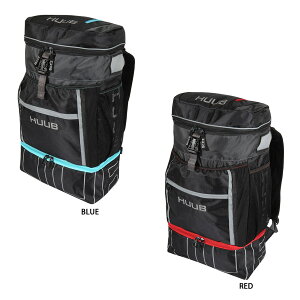 Image: Rakuten Ichiba
Transition bag
Lowest price on Rakuten is JPY 16,830 (as of 10/13), ranging up to JPY 81,651 depending on the shop. Prices change daily.
RecommendedSee it on Rakuten IchibaSee it on Yahoo! Shopping JapanFor the running shoe, the rule's text is the shortest
The articles on gear for the run are only 4 lines in Article 117: running shoes are the base, barefoot is banned, going bare from the waist up is banned, and do not run with the helmet on.
In the body of these competition rules, I found no article setting sole thickness. The rule on thick marathon soles belongs to the athletics rules (article on carbon shoes).
For gear by event, I compare the numbers model by model in the article on swim gear (wetsuits, goggles, trisuits) and the article on bike gear (bikes, helmets, shoes).
FAQ
How many km is a standard triathlon?
51.5km in total. A 1.5km swim, 40km bike and 10km run, exactly 2 times the sprint (25.75km).
Can I enter a triathlon on a cross bike?
In principle, no. Under the rules, flat-bar handlebars are banned (Article 94, item 11). But for beginner races it is written "per the race regulations." Whether you can enter differs by race.
Can I wear a watch in the swim of a triathlon?
In the general division, it is not banned by the rules. What Article 70 bans by name is a watch in standard and shorter races for elite, U23 and junior. The general division is not covered by this ban. The same article also bans "all jewelry," so if the race guide has a rule on watches, that comes first.
Is a sleeveless wetsuit against the rules?
Not by the text. What Article 67 requires is 3 things: up to 5mm thick, not covering beyond the wrists and ankles, and not a lower-body-only shape. On days when it is mandatory, the condition is "covering the torso" (Article 73). Whether it has sleeves is not among these 3 conditions.


